Page 73 - Glasbenopedagoški zbornik Akademije za glasbo v Ljubljani / The Journal of Music Education of the Academy of Music in Ljubljana: Mostovi med formalnim in neformalnim glasbenim izobraževanjem, leto 15, zvezek 31 / Year 15, Issue 31, 2019
P. 73
Tihana Škojo, Renata Jukiæ, THE ASSESSMENT OF PEDAGOGICAL COMPETENCES...
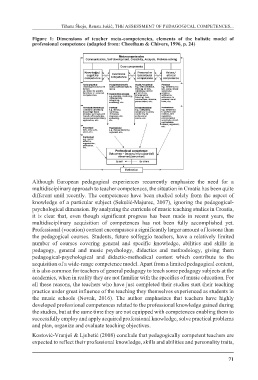
Figure 1: Dimensions of teacher meta-competencies, elements of the holistic model of
professional competence (adapted from: Cheetham & Chivers, 1996, p. 24)
Although European pedagogical experiences recurrently emphasize the need for a
multidisciplinary approach to teacher competences, the situation in Croatia has been quite
different until recently. The competences have been studied solely from the aspect of
knowledge of a particular subject (Sekuliæ-Majurec, 2007), ignoring the pedagogical-
psychological dimension. By analyzing the curricula of music teaching studies in Croatia,
it is clear that, even though significant progress has been made in recent years, the
multidisciplinary acquisition of competences has not been fully accomplished yet.
Professional (vocation) content encompasses a significantly larger amount of lessons than
the pedagogical courses. Students, future solfeggio teachers, have a relatively limited
number of courses covering general and specific knowledge, abilities and skills in
pedagogy, general and music psychology, didactics and methodology, giving them
pedagogical-psychological and didactic-methodical content which contribute to the
acquisition of a wide-range competence model. Apart from a limited pedagogical content,
it is also common for teachers of general pedagogy to teach some pedagogy subjects at the
academies, when in reality they are not familiar with the specifics of music education. For
all these reasons, the teachers who have just completed their studies start their teaching
practice under great influence of the teaching they themselves experienced as students in
the music schools (Novak, 2016). The author emphasizes that teachers have highly
developed professional competences related to the professional knowledge gained during
the studies, but at the same time they are not equipped with competences enabling them to
successfully employ and apply acquired professional knowledge, solve practical problems
and plan, organize and evaluate teaching objectives.
Kostoviæ-Vranješ & Ljubetiæ (2008) conclude that pedagogically competent teachers are
expected to reflect their professional knowledge, skills and abilities and personality traits,
71
Figure 1: Dimensions of teacher meta-competencies, elements of the holistic model of
professional competence (adapted from: Cheetham & Chivers, 1996, p. 24)
Although European pedagogical experiences recurrently emphasize the need for a
multidisciplinary approach to teacher competences, the situation in Croatia has been quite
different until recently. The competences have been studied solely from the aspect of
knowledge of a particular subject (Sekuliæ-Majurec, 2007), ignoring the pedagogical-
psychological dimension. By analyzing the curricula of music teaching studies in Croatia,
it is clear that, even though significant progress has been made in recent years, the
multidisciplinary acquisition of competences has not been fully accomplished yet.
Professional (vocation) content encompasses a significantly larger amount of lessons than
the pedagogical courses. Students, future solfeggio teachers, have a relatively limited
number of courses covering general and specific knowledge, abilities and skills in
pedagogy, general and music psychology, didactics and methodology, giving them
pedagogical-psychological and didactic-methodical content which contribute to the
acquisition of a wide-range competence model. Apart from a limited pedagogical content,
it is also common for teachers of general pedagogy to teach some pedagogy subjects at the
academies, when in reality they are not familiar with the specifics of music education. For
all these reasons, the teachers who have just completed their studies start their teaching
practice under great influence of the teaching they themselves experienced as students in
the music schools (Novak, 2016). The author emphasizes that teachers have highly
developed professional competences related to the professional knowledge gained during
the studies, but at the same time they are not equipped with competences enabling them to
successfully employ and apply acquired professional knowledge, solve practical problems
and plan, organize and evaluate teaching objectives.
Kostoviæ-Vranješ & Ljubetiæ (2008) conclude that pedagogically competent teachers are
expected to reflect their professional knowledge, skills and abilities and personality traits,
71